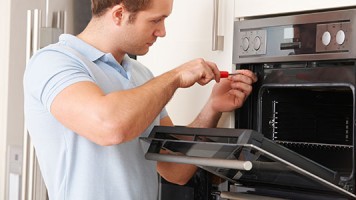
Kraig, common to these models is the heating element needing replaced due to this error. For this model it’s a 134792700 & I’ll link it below. Good luck!
- AV Repair Help answered 11 years ago
I would definitely start with the drain on this, it could be connected to all those symptoms. Check all your components while in there and see if anything else is failing. But could be a matter of clearing, thawing, and letting it de-ice for 24 hours before restarting and then keeping an eye on it.
- AV Repair Help answered 11 years ago
thank you.the issue is the basket won’t tumble or spin the clothes. I go the codes for bad hall sensor but the motor tests ohmed out fine. it also starts and won’t stop filling until the control board starts the pump. it will actually fill up half way before the pump kicks in. the fill valve I fine, going to get a new pressure switch first to see if that solves the problem.
- Guest answered 11 years ago
Fred, we usually will using locking nuts and add them to the legs. You can take off those little flat legs and add a nut before reattaching them so that you can adjust and then tighten them down to keep the unit from moving and unbalancing itself again. Hope this helps!
- AV Repair Help answered 11 years ago
My best guess without the model information is the heating element shorted causing the thermal fuse to open because the element was continuously energized. Will need to replace the element and most likely the thermal fuse as well. Let me know specifics if you need more help from there.
- AV Repair Help answered 11 years ago
If this worked, I would leave as is and tell the customer to monitor. They may never have a problem with it again. At least you’ll know what the part will be if they do happen to call back in the future!
- AV Repair Help answered 11 years ago
See parts link below and link for Tech. Sheet . Our site specializes in making the videos and are going to implement technician sheets on our products in the next website phase. We are currently focused on the video demand from our hundreds of technicians on our site. Since 95% of all appliances have the tech. sheet with them it has not been a priority . Most of our requests are to produce more videos . We have over 1400 videos currently and are building daily. Thanks Matt Ace technician
http://www.manualslib.com/manual/100321/Maytag-Mah9700aw.html?page=16#manual
http://www.manualslib.com/manual/100321/Maytag-Mah9700aw.html?page=14#manual
http://www.manualslib.com/manual/100321/Maytag-Mah9700aw.html?page=8#manual
http://www.manualslib.com/manual/100321/Maytag-Mah9700aw.html?page=17#manual
http://lookup.appliancevideo.com/lookup/86362/521165
- AV Repair Help answered 11 years ago
- last active 11 years ago
Harley, this is going to sound too easy, but what about the drain trap assembly? Everyone always forgets about them but it’s where most of the coins, bobby pins, hair ties, and other random objects get caught and held so they don’t enter the pump area. Hopefully this is it and it’ll be an easy fix/clean out.
- AV Repair Help answered 11 years ago
James, that motor # is WH20X10058 and we unfortunately do not stock it. Hope you can find it from one of your vendors, or maybe you won’t need it after all!
- AV Repair Help answered 11 years ago
When a refrigeration unit of any kind is unplugged, the symptoms may disappear. It could be something overheating, some kind of defrost or icing problem, maybe the control panel just needed to have a power reset.
You will know in a couple of days though, give it some time and see if the customer calls you back.
If it happens again I would take a look at starting relay. Have seen this happen many times. The ( ceramic disc ) in relay will crack and cause starting issue. It then gets very hot from trying to restart over and over, plus compressor gets hot and pulls more amps on start up. Given time to cool down ( depending on condition of the ceramic disc ), it may start later. It’s in the circuit for only milliseconds and then dropped out.
One other possibility the unit could have been locked in a defrost cycle. Once it has been disconnected it probably reset the board. If it was the defrost board, it will happen again. That’s what I would suspect since nothing was running.
- AV Repair Help answered 11 years ago
ED5RHEXNL 00 AND YES IT IS COOLING JUST FINE ?
- Guest answered 11 years ago
Just a couple of questions to better help you.
1) Can you double check you model number as it does not come up in our system.
2) Is the unit cooling correctly ? are you getting -5 to +5 degrees in the Freezer and 37-42 degrees in Refrigerator section ?
Let me know
Thanks Matt Ace technician
- AV Repair Help answered 11 years ago
ApplianceVideo.com has 22 videos on this model. Here is the link https://www.appliancevideo.com/appliances/lg-dle1001w-dryer/
- AV Repair Help answered 11 years ago
See below the parts breakdown and video that is not your exact model but may help you replace the oven door hinges Model # JBP35SM5SS GE Free Standing, Electric range .
http://lookup.appliancevideo.com/lookup/224176/1523419/281#281
Repair Help Video
- AV Repair Help answered 11 years ago
- last active 11 years ago
Normal sounds
Your new ice maker may make sounds that are not familiar to you. Most of the new sounds are normal. Hard surfaces like the floor and walls can make the sounds louder than they actually are. The following list describes the sounds that might be new to you and what may be causing them.
• Rattling noises may come from the flow of the refrigerant or the water line. Items stored on top of the ice maker can also make noises.
• The high efficiency compressor may make a pulsating or high-pitched sound.
• Water running may make a splashing sound.
• You may hear air being forced over the condenser by the condenser fan.
• During the harvest cycle, you may hear the sound of ice cubes falling into the ice storage bin.
Preparing the ice maker for long storage
If the ice maker will not be used for a long time, or is to be moved to another place, it will be necessary to drain the system of water.
1. Shut off the water supply at the main water source.
2. Disconnect the water supply line from the water inlet.
3. Shut off the electric supply at the main electrical power source.
4. Take out the ice storage bin to remove any remaining ice and water. Dry the bin.
5. Pull off the drainage tube of the water trough to drain off all water.
Water pump
Compressor
Water inlet
Evaporator
Fan motor
Condenser
Hot gas valve
18
6. Leave the door open to allow for circulation and to prevent mold and mildew.
7. Leave water supply line and power cord disconnected until ready to reuse.
IMPORTANT:
• Do not touch the power plug when your hands are wet.
• Never unplug the unit by pulling on the cord. Grasp the plug and pull out firmly.
CLEANING AND MAINTENANCE
Periodic cleaning and proper maintenance will ensure efficiency, top performance, and long life. The maintenance intervals listed are based on normal conditions. You may want to shorten the intervals if you have pets, or there are other special considerations.
What shouldn’t be done
Never keep anything in the ice storage bin that is not ice: objects like wine and beer bottles are not only unsanitary, but the labels may slip off and plug up the drain.
What parts should be kept clean
There are 5 things to keep clean:
1. The exterior
2. The interior
3. The condenser
4. Water distribution tube
5. The ice-making system
If the ice maker is left unused for a long time, before the next use it must be thoroughly cleaned. Follow carefully any instructions provided for cleaning or use of sanitizing solutions. Do not leave any solution inside the ice maker after cleaning.
19
Exterior cleaning
The door and cabinet may be cleaned with a mild detergent and warm water solution such as 1 oz. of dishwashing liquid mixed with 2 gallons of warm water. Do not use solvent-based or abrasive cleaners. Use a soft sponge and rinse with clean water. Wipe with a soft clean towel to prevent water spotting.
If the door panel is stainless steel, stainless steel can discolor when exposed to chlorine gas and moisture. Clean stainless steel with a mild detergent and warm water solution and a damp cloth. Never use an abrasive cleaning agent.
Interior cleaning
The ice storage bin should be sanitized occasionally. Clean the water trough before the ice maker is used first time and reused after stopping for an extended period of time. It is usually convenient to sanitize the trough after the ice making system has been cleaned, and the ice storage bin is empty.
1. Disconnect the power to the unit.
2. Open the door and take out the removable ice storage bin. With a clean cloth, wipe down the interior of unit and ice bin with a sanitizing solution made of 1 ounce of household bleach or chlorine and 2 gallons of hot (95ºF – 115ºF) water.
3. Rinse thoroughly with clear water.
4. Screw off the drainage nut to drain completely.
5. Put the ice storage bin inside the unit.
6. Reconnect power to the unit.
The ice scoop should be washed regularly. Wash it just like any other food container.
Before proceeding with cleaning and maintenance operations, make sure the power line of the unit is disconnected and the water line is shut off.
DO NOT use solvent-based cleaning agents or abrasives on the interior. These cleaners may transmit taste to the ice cubes and damage or discolor the interior.
20
Condenser cleaning
A dirty or clogged condenser prevents proper airflow, reduces ice making capacity, and causes higher than recommended operating temperatures that may lead to component failure. Have the condenser cleaned at least once every six months.
1. Unplug the ice maker or disconnect power.
2. Gently pull off the lower front louver.
3. Remove dirt and lint from the condenser fins and the unit compartment with the brush attachment of a vacuum cleaner.
4. Reassemble the lower front louver.
5. Plug in the ice maker or reconnect power.
Water distribution tube cleaning
When you find the ice cubes are incompletely formed or the output is low, the water distribution tube may be blocked. Turn off the power button, rotate the water distribution tube, locate the holes in the distribution tube and use a pointed object such as a toothpick to dredge the holes. Then rotate the water distribution tube back to its original position. If the tube is badly blocked, clean it as follows:
1. Shut off the water supply
2. Disconnect the water hose from the distribution tube.
3. Lift the right side up, then remove the distribution tube.
4. With a brush, clean the tube with a dilute solution of warm water and a mild detergent such as dishwashing liquid. After removing the dirt and lint from the surface, rinse the tube with clean water.
5. Replace the distribution tube.
6. Reconnect the water supply.
Ice-making system cleaning
Minerals that are removed from the water during the freezing cycle will eventually form a hard, scaly deposit in the water system. Cleaning the system regularly helps remove the mineral scale buildup. How often to clean the system depends upon how hard your water is or how effective your filtration may be. With hard water of 15 to 20 grains/gal. (4 to 5
DO NOT touch the condenser fins. They are sharp and can be easily damaged.
21
grains/ liter), you may need to clean the system as often as once every 6 months.
1. Make sure that all the ice is off the evaporator. If ice is being formed, wait until the cycle is completed, then press the machine’s ON/OFF switch on the control panel.
2. Remove all ice from the storage bin.
3. Keep the ice maker connected to the water supply. Pour 8 oz. of Nickel-Safe Ice Maker Cleaner Solution into the water trough. Then press the ON/OFF switch and the CLEAN button, initiating the wash cycle. The machine will run in the Automatic Clean Mode.
4. Allow 30 minutes for proper cleaning. After cleaning, press the ON/OFF switch again. Use a drain hose on the front of the water trough to drain off the waste water to a convenient container.
NOTE: Don’t drain off the waste water to the inside of the cabinet.
5. Repeat steps 3 and 4 (without Ice Maker Cleaning Solution) three times to rinse the ice making system thoroughly.
• NOTE: Ice Maker Cleaner Solution in the water bin during the rinse is not needed.
6. Prepare a sanitizing solution made of 1 ounce of household bleach and 2 gallons of hot water (95º to 115ºF). Wipe the entire bin inside and outside, covering the entire surface of the walls.
7. Fill a spray bottle with the sanitizing solution and spray all corners and edges, making sure to cover all surfaces with the solution.
8. Allow the solution to be in contact for at least 3 minutes, then dry.
9. Repeat step 5 to rinse the ice making system one more time.
10. Press the ON/OFF button again. The machine will return to the regular ice making mode. Discard the first batch of ice.
The ice machine cleaner contains acids.
DO NOT use or mix with any other solvent-based cleaner products.
Use rubber gloves to protect hands. Carefully read the material safety instructions on the container of the ice machine cleaner.
Discard the first batch of ice produced after cleaning.
22
Control panel:
Description of LEDs and buttons:
1. Bin Full (Red) LED: Bin full indicator light
When this is lit, the ice storage bin is full of ice or there is something blocking the bin-full probe. The unit will stop working. When ice cubes are removed from the ice storage bin, freeing the bin-full probe, the red LED will remain flashing for 3 minutes, then the unit will restart and return to the ice making mode.
2. Ice Making(Green) LED: Ice making indicator light
When this is lit, the unit is working in the ice making mode controlled by a temperature probe on the evaporator. When the green LED flashes, the unit is working in the ice making mode controlled by a fixed timer.
3. Ice Harvest (Yellow) LED: Ice harvest indicator light
When this is lit, the unit is working in the ice harvest mode controlled by the ice-full probe.
When both the green and yellow LEDs are lit, the unit is in the cold preservation mode.
4. Mode button: Mainly for service. When this is pressed, the ice making mode changes to the ice harvest mode or vice versa. The mode can be judged from the status of the green and yellow LEDs.
Ice Size Adjustment Guide:
1. Press and hold the “Clean” button and the “Mode” button together for at least 3 seconds. The unit will enter the Ice Size Adjustment mode. The “HARVEST” LED (yellow) will be blinking continuously during the ice size adjustment.
2. While in the Ice Size Adjustment mode, press the “Clean” button or the “Mode”
23
button for the desired ice size.
Smaller ice setting:
By pressing the “Clean” button, you can decrease the size of the ice cubes. The “ICE” LED (green) will flash as you lower the ice size and will finally be blinking at the setting of smallest ice size.
Larger ice setting:
By pressing the “Mode” button, you can increase the size of the ice cubes. The “BIN FULL” LED (red) will flash as the larger size is set and will blink when the setting of largest ice size has been reached.
After 10 seconds without any operation, the unit will return to the previous mode.
NOTE: During the ice size adjustment, the “BIN FULL”, “ICE” and “HARVEST” LEDS blinking all at once indicate that the unit is in the default factory setting of the ice size.
MAJOR FUNCTIONS
1. The operating procedure is completely automatic.
2. When the ice storage bin is full of ice cubes, the machine stops making ice and proceeds to the cold preservation stage automatically. It starts making ice again after ice cubes are removed.
3. The different colors of the LED display indicate various work modes.
4. The fan motor responds to the ambient temperature. If it is cold, the motor will stop working to keep the cooling system in good working condition.
5. A sensitive probe and accurate timer enhance the performance of the ice maker.
6. A compressor protection system is built in.
24
TROUBLESHOOTING
Before Calling for Service
If the unit appears to be malfunctioning, read through the OPERATION section of this manual first. If the problem persists, check the Troubleshooting Guide on the following pages. Some of the problems mentioned in the Guide can be solved easily without a service call.
Troubleshooting Guide
Problem
Possible Cause
Probable Correction
The machine doesn’t operate.
The ice maker is unplugged.
Plug the ice maker in.
The fuse is blown.
Replace fuse. If it happens again, call for service to check for a short circuit in the unit.
The ice maker power button is set at OFF.
Switch the ice maker power button to ON.
The ice storage bin is full of ice.
Remove some ice cubes. Be sure the ice-full probe is free of ice.
The water doesn’t feed in after the machine starts.
The water supply tap is turned off.
Turn on the water supply tap.
The water supply pipe is not properly connected.
Reconnect the water supply pipe.
Machine makes ice, but bin does not fill up with ice.
The condenser may be dirty.
Clean the condenser.
The air flow to the ice maker may be obstructed.
Check the installation.
The ambient temperature and water temperature are high, or unit is near some heat source.
Check the installation.
Water is leaking out of the unit.
Some water falls to the floor when you open the door to remove ice from storage bin.
Normal condensation on the door or some water together with ice. Take care when you take out ice.
Water supply connection is leaking.
Tighten fitting. See Connecting the water line.
Drain pipe higher than drain outlet.
Lower drain pipe.
25
Cubes are partially formed or are white on the bottom.
Not enough water in the water trough.
Check if the water supply pressure is below 15 psig.
Check water supply or filter may be restricted.
Check for a water leak at the water trough.
Noise during operation
The feet are not leveled and locked.
Level and lock the feet. See Leveling the Ice Maker.
Certain sounds are normal.
See Normal Sounds.
The ice maker stops suddenly while making ice.
The electricity is off.
Reconnect the power supply line.
The room temperature is out of the stated range.
Cut off the electricity and leave the ice maker disconnected until the temperature returns to within the stated range.
The ice storage bin is full of ice.
Remove some ice cubes; make sure the ice-full probe is free of ice.
The body of the ice maker is electrified
The ground line isn’t in the socket.
Use a socket meeting the grounding requirements.
Scaling occurs frequently inside the machine.
The hardness level of the water is too high.
Install a water-softening device in front of the water inlet.
Water leaks from the ice storage bin
The drainhole below the ice storage bin is blocked.
Remove the ice storage bin and clean the drainhole.
The drain hose is kinked or improperly placed higher than the floor of the ice storage bin.
Check the drain hose to be sure water can be drained out unhindered.
26
- AV Repair Help answered 11 years ago
Might be a control lock? Hold 3 seconds to release? The error is telling you to hold the button for 3 seconds. It may be locked.
- AV Repair Help answered 11 years ago
Change the freezer temps to at least -2ºF to help maintain temps to the ice area. There might be issues with the defrost system staying too long into the cycle, . Only way to tell is by placing a temp logger in the freezer and check the readout after 3-5 days. Read the data logger put next to the ice bucket: I think you will find a defective defrost thermostat .
- AV Repair Help answered 11 years ago
Oven Thermostat Calibration
Use the following procedure to check and adjust the calibration on oven thermostats: –
Note: A good high-temperature digital thermometer is essential when testing oven temperatures.
1. It is recommended that approximately 30 minutes prior to your arrival at the customer’s property, you contact the customer and have them place one rack in the center position in the oven, remove the other racks and ask them to preheat the oven to 350oF.
2. If this is not possible, complete step one on arrival.
3. Place the digital thermometer-sensing bulb in the center of the oven cavity. Ensure the bulb is not touching any metal surfaces including the oven rack or cavity walls.
4. Allow the oven to come up to temperature and cycle at least three times or more (this may take 20 to 25 minutes.
5. Once the oven is at the pre-set temperature of 350ºF, check and record the oven temperatures at the points when the oven starts to heat (cut-in point) and when it stops heating (cut-out point), as in Fig. 01. Record these for at least three cycles (Fig. 02). DO NOT! Record the temperature when the oven is in the heating process, as the temperature will continue to rise and fall after the thermostat cycles.7. Verify that the thermostat dial is reading the same temperature.
8. If they match, there are no additional adjustments or repairs required.
9. If the temperature difference is greater than 50ºF, then the thermostat must be replaced. Before replacing the thermostat, make sure that all other components and seals of the oven are operating normally and are intact.
10. If the temperature difference is less than 50oF, then the thermostat can still be adjusted, in most situations. See below for adjustment procedures.
11. After making the necessary adjustment, the oven must be cycled three times to verify that the thermostat is operating within acceptable limits. Follow steps 2 to 6 above.
Note: Different types of thermostats will have different locations for their adjustment screws. Some may have a sealer on the screw head to prevent un-intended movement of the setting.
Adjusting Gas Module Thermostats
1. Pull the thermostat knob straight off the shaft without turning the knob.
2. While holding the thermostat shaft, use a small flat bladed screwdriver and insert it through the center of the shaft to make the adjustments.
3. Adjustments are made by rotating the setscrew clockwise to decrease the temperature and counter clockwise to increase the temperature. NOTE: Adjustments should be made in very small increments.
Adjusting Electric Oven Thermostats
1. Pull the thermostat knob straight off the shaft without turning the knob.
2. Use a small flat bladed screwdriver to make the adjustments. The screw located in the hole closest to the shaft will be the bake temperature adjustment screw.
3. Rotate the screw clockwise to decrease the temperature and counter clockwise to increase the temperature. NOTE: Adjustments should be made in very small increments.
Page 2 of 2
S-DGEN-07-02
OCTOBER 2007
COPYRIGHT ©
- AV Repair Help answered 11 years ago
- last active 11 years ago
Sounds like an interlock switch beginning to fail under load.
General Procedure: Diagnostic Tests
1. Plug in oven or connect power.
2. Enter Diagnostics Home Menu.
3. Press the Up/Down navigation buttons to highlight the
Component Activation feature. Press START.
4. Press the Up/Down navigation buttons to highlight the
Bake element. Press START.
5. Check the information referring to the component.
6. Press the Up/Down navigation buttons to highlight the
Back function, and select it by pressing START to recall
the previous menu.
7. Repeat steps 4 – 6 for the other components.
8. From the Diagnostics Home Menu, press the Up/Down
navigation buttons to highlight the Error Diagnostic
feature. Press START.
9. Select Error History by pressing the Up/Down
navigation buttons and then START. Use the Up/Down
navigation buttons to check all the recorded errors.
10. Press the Up/Down navigation buttons to highlight the
Back function. Press START to recall the previous
menu.
11. Select the System Information feature by pressing the
Up/Down navigation buttons and START.
12. System Information allows modification to the oven
model and size.
13. Press the Up/Down navigation buttons to highlight the
Back function, and select it by pressing START to
- AV Repair Help answered 11 years ago
Spin,
Th e lid lock light flashing only signifies an error…any error. If you can get the top up on the washer you can access the tech sheet to tell you how to put the machine in a diagnostic mode and to read error codes .
If you are unable to access this information, please write back and I will do my best to assist you in how to access it and read the fault codes.
- Dylan, Ace Appliance answered 11 years ago