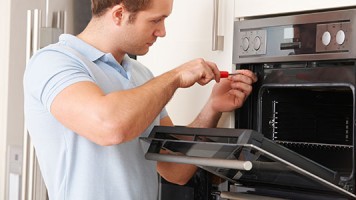
Power stopping at the board is a very good indicator that your problem may be with in the board itself.  Have you detached and reattached all electric connections?  Sometimes with a total power failure it can be something as simple as a loose of power due to a loose harness connection.  If all your connections are good make sure you have correct power at the outlet (if you have not tried that yet).  Next take a picture with your phone of all the connections and remove the board.   Traditionally there are -2- things you can look for on the board, a burned out relay or a burn spot on the board itself.   If you smell the board Is there  a burning odor?   If you have burn spots and/or a burn odor chances are good you need to replace that board.
 As far the original part number being substituted out to a new part number, L-G is notorious for this, I would not look at that as a sign that you have a defective part per say.   They seem to change/update to new part numbers more than most of the other brands out there, usually without releasing information to the public on why.
 We hope this helps!
- AV Repair Help answered 12 years ago
Hi. Typically the best way to test a control board is power in and power out. Sounds like you have verified that you are getting proper power to the main control board. With power to the board and the board not operating or having a display you have a bad control board. I would also check the circuit that you were using when this issue happened to make sure something did not short out to cause the board to go bad. Please call (800) 830-5465 for parts. Good luck with your repair!
- Brian, Ace Appliance answered 12 years ago
never mind regarding the top rack removal for the KDHE404DSS…got it out, pretty easy once you do it
- Guest answered 12 years ago
After contacting LG and checking into the information, they subbed the part number to 5209JA1044A from LG. This is the new part number
- AV Repair Help answered 12 years ago
There are two paths through the condenser for air to flow. One path is for the hot moist air from the dryer and the other is for the cooler room air. As the air passes through the condenser the cooler room air causes the warm moist air from the dryer to condense and it is directed to the rear of the cabinet where the pump can discharge the condensed vapor which has now become water. It is imperative that the air paths in both directions are clean on the condenser. The customer should not use fabric softener sheets in this style of dryer. The dryer should have a slight tilt to the rear to help the water flow to the rear correctly.
The hot moist air will condense where ever there is a temperature difference and by it occurring on the front of the condenser, it is apparent there is an air flow issue which is not allowing the air to pass through the condenser. There is a separate fan blade or blower wheel that moves the room air across the condenser, make sure it is not clogged with lint etc. I would also assume with these symptoms, that the dryer is taking longer than normal to dry a load of clothes. I would also make sure that the washer is spinning at full speed to eliminate as much water as possible, prior to loading into the dryer. But bottom line, I think you have an air flow problem.
- AV Repair Help answered 12 years ago
One of our technicians has a problem similar to this and it was the PCB. It was unable to successfully start the compressor after a few cycles. The compressor did ohm out OK, so I changed the PCB. Solved the issue.John Ace technician
- AV Repair Help answered 12 years ago
You have done everything correct on the diagnostic side, sounds like control issue. I would replace the machine control microcomputer. Ace Appliance
- AV Repair Help answered 12 years ago
See video links on this product … https://www.appliancevideo.com/appliances/wh10-mhw4200b/
I have seen this video fix at ApplianceVideo.com. Go there and search by error code. Matt Ace technician
- AV Repair Help answered 12 years ago
- last active 11 years ago
Here is the troubleshooting chart and other information for your Frigidare range on ApplianceVideo.com if you are in need of any parts please support our parts department on line at http://savemoreonparts.com/ or call 1-800-830-5465 7-days a week until 11pm Eastern time. Thanks Matt Ace service technician
E10 – E11 error code Fill time too long
Water leak in tub or air leak in air bell
Reed Switch
Water not pumping out fast enough
Drain pump relay on board failed or
wire off pump
1. Is the incoming water fl ow normal? Yes, go to step (4). No, go
to step (2).
2. Are the incoming water faucets turned on? No, turn water
faucets on. Yes, go to step (3).
3. Is the incoming water pressure above (30) psi? No, have
customer correct pressure problem. Yes, check for kinked or
blocked incoming water hoses, clean incoming water screens.
If problem still remains, replace the water inlet valve assembly.
4. Does the fi ll water continue to enter the washer? Yes, go to
step (5) no, go to step (6).
5. Remove power from washer. Did the water fi ll stop? Yes, go to
step (6). No, replace the inlet valve assembly.
6. For Better models, check the electronic pressure sensor. For
Good models, check the pressure switch. Pressure sensor
checks good. Go to step (7). Pressure sensor checks incorrect.
Replace pressure sensor.
7. Replace the Main Control Board.
1. Is the washer leaking water? Yes. Correct water leak. No. Go to
step (2).
2. Is there a leak in the air bell system? Yes. Correct the leak
problem. No. Go to step (3).
3. For Better models, check the electronic pressure sensor. For
Good models, check the pressure switch. Defective. Replace
pressure sensor(switch). Good. Go to step (4)
4. Replace the Main Control Board.
1. Is the dispenser drawer closed? No, close the drawer. Yes, go
to step (2).
2. Remove the drawer and check the magnet. Magnet missing or
defective, replace the magnet. Magnet good. Go to step (3).
3. Open the console and check the reed switch. Defective, replace
the reed switch. Good, replace the Main Control Board.
1. Check the drain hose for restrictions. Restriction, correct
problem. No restriction, go to step (2).
2. Start the washer and check for 120VAC at the drain pump.
Zero, replace the Main Control Board. 120VAC, remove the
pump and check it for blockage. If blocked, remove the
restriction, if not, replace the pump.
Replace Main Control Board or repair wiringDrain pump relay on board failed or
wire off pump
Recirculation pump relay sense
Recirculation pump relay
Better models- pressure sensor not
communicating with Main Control
Board
Pressure sensor calibration problem
Better models- pressure sensor
indicates water overfi ll
Main Control Board problem
Replace Main Control Board or repair wiring
1. Check wiring between Main Control Board and pump. If correct,
go to step (2).
2. Check wiring between Main Control Board and recirculation
board. If correct, go to step (3).
3. Check pump for open coil (resistance check). If correct, replace
Main Control Board.
1. Check wiring between Main Control Board and pump. If correct,
go to step (2)
2. Check wiring between Main Control Board and recirculation
board. If correct, go to step (3).
3. Check pump for open coil (resistance check). If correct, replace
Main Control Board.
Inspect the wiring between the pressure sensor and the Main
Control Board. Defective wiring, correct wiring. Good wiring,
replace the pressure sensor. If this does not correct the
problem, replace the Main Control Board.
Inspect the wiring between the pressure sensor and the Main
Control Board. Defective wiring, correct wiring. Good wiring,
replace the pressure sensor. If this does not correct the
problem, replace the Main Control Board.
1. Is the water level above 4.5 inches? Yes, go to step (2). No, go
to step (4).
2. Does the water enter the washer continuously? Yes, go to step
(3). No, replace the Main Control Board.
3. Remove power from the washer. Does the water stop coming
in? No, replace water valve assembly. Yes, check wiring to
valve assembly for shorts. If wiring is good, replace the Main
Control Board.
4. Replace the pressure sensor switch. Did this correct the
problem? Yes, problem solved. No, replace the Main Control
Board.
Replace Main Control Board.
E24 , E25, E26, E31, E32, E35, E36, E38, E41, E42, E43, E44,E45, E46, E47, E48, E49 ERROR CODES
Air trap clogged
Main Control Board thinks the door
switch is open
Door remains locked after cycle is
complete
Main Control Board problem
Main Control Board problem
Main Control Board problem
Main Control Board problem
Board thinks the door PTC circuit is
open in spin
Board thinks the door PTC circuit is
closed
Door incongruence between door
line and door sense.
1. Is the water level above 4.5 inches? Yes, go to step (2). No, go
to step (4).
2. Does the water enter the washer continuously? Yes, go to step
(3). No, check air trap for clog. If not, replace the Main Control
Board.
3. Remove power from the washer. Does the water stop coming
in? No, replace the water valve assembly. Yes, check the wiring
to valve assembly for shorts. If wiring is good, replace the Main
Control Board.
4. Replace the pressure sensor switch. Did this correct the
problem? Yes, problem solved. No, replace the Main Control
Board.
1. Is the loading door closed? No, close the door. Yes, go to step
(2).
2. Disconnect the plug from J2 on the Main Control Board and
check for continuity between the pins in the plug. Open, check
the door strike. If good, replace the door switch assembly.
Closed, replace the Main Control Board.
Remove power from the washer. Wait one minute. Can you
open the door? Yes, replace the Main Control Board. No,
replace the door switch assembly. Note: you may have to
break the door strike to do this.
Replace Main Control Board
Replace Main Control Board
Replace Main Control Board
Replace Main Control Board
Remove the door lock assembly and measure the resistance of
the PTC. Shorted or open, defective door lock assembly. Reads
around 1500 ohms, defective Main Control Board.
Refer to E47 solution
1. Is the loading door closed? No, close the door. Yes, go to step
(2).
2. Can you hear the lock attempt to close? Yes, check the door
strike. If good, replace the door switch. No, go to step (3)
3. Check the wire connection between door lock and Main
Control Board. If good, replace the door lock. If problem is not
corrected, replace the Main Control Board.
E38
E41
E42
E43
E44
E45
E46
E47
E48
E49
Error
Code Description Solution
Section 2 Washing Machines
2-4
Bad signal from tacho generator.
Low voltage to Speed Control Board.
Over speed.
Motor overheating.
High motor current
Disconnect the plug from the drive motor and measure the
resistance of pins 4 and 5 in the motor. If reading is between
105 and 130 ohms, replace the Speed Control Board. If the
meter reads outside 105 and 130 ohms, replace the motor.
Check the wiring between the Main Control Board and the
Speed Control Board. If good, replace the Speed Control Board.
1. Remove the belt from the motor and spin the motor pulley.
Does the motor spin free? No, replace the motor. Yes, go to
step (2)
2. Spin the tub pulley. Does the tub spin free? No, check the tub
bearings. Yes, go to step (3).
3. Disconnect the plug from the drive motor and measure the
resistance between pins 4 and 5 in the motor. If the meter
reads other than between 105 and 130 ohms, replace the
motor. If the reading is between 105 and 130 ohms, go to step
(4).
4. Disconnect the plug from the motor and measure the resistance
of the windings. (Pin 1 to 2, pin 1 to 3, pin 2 to 3) all readings
should be between 3 and 6 ohms. If readings are correct,
replace the Speed Control Board. If readings are incorrect,
replace the motor.
1. Remove the belt from the motor and spin the motor pulley.
Does the motor spin free? No. Replace the motor. Yes. Go to
step (2)
2. Spin the tub pulley. Does the tub spin free? No. Check the tub
bearings. Yes. Go to step (3).
3. Disconnect the plug from the motor and measure the resistance
of the windings (pin 1 to pin 2, pin 1 to pin 3, pin 2 to pin 3).
All readings should be between 4 and 6 ohms. If the readings
are correct, replace the Speed Control Board. If the readings
are incorrect, replace the motor.
1. Remove the belt from the motor and spin the motor pulley.
Does the motor spin free? No, replace the motor. Yes, go to
step (3).
2. Spin the tub pulley. Does the tub spin free? No, check the tub
bearings. Yes, go to step (3).
3. Disconnect the plug from the motor and measure the resistance
of the windings (pin 1 to 2, pin 1 to 3, pin 2 to 3). All readings
should be between 4 and 6 ohms. If readings are correct,
replace the Speed Control Board. If readings are incorrect,
replace the motor.
E52
E53
E54
E55
E56
High current on inverter
High current on motor phase
No tacho signal for 3 seconds
Door PTC sensing problem
High temperature on heat sink caused
by overloading
High temperature on heat sink
High temperature on heat sink
Refer to E56 solution
Refer to E56 solution
1. Remove the belt from the motor and spin the motor pulley.
Does the motor spin free? No, replace the motor. Yes, go to
step (3).
2. Spin the tub pulley. Does the tub spin free? No, check the tub
bearings. Yes, go to step (3).
3. Disconnect the plug from the drive motor and measure the
resistance between pins 4 and 5 in the motor. If the meter
reads other than between 105 and 130 ohms, replace the
motor. If the reading is between 105 and 130 ohms, go to step
(4).
4. Disconnect the plug from the motor and measure the resistance
of the windings (pin 1 to 2, pin 1 to 3, pin 2 to 3). All readings
should be between 4 and 6 ohms. If readings are correct,
replace the Speed Control Board. If readings are incorrect,
replace the motor.
1. Is the loading door closed? No, close the door. Yes, go to step
(2).
2. Can you hear the lock attempt to close? Yes, check the door
strike. If good, replace door switch. No, go to step (3).
3. Check the wire connection between the door lock and the Main
Control Board. If good, go to step (4).
4. Place the unit into Rinse/Spin and remove any load from tub.
Start the cycle. Does the water pump out? If not, check the
drain hose for restrictions. Check the drain pump for 120VAC
at pump. If no power at pump, check wiring. If correct, check
for 120VAC at Main Control Board. If unit does pump out,
does unit go into spin? If no, replace door lock. If problem
continues, replace Main Control Board.
Replace the Speed Control Board.
Replace the Speed Control Board.
Replace the Speed Control Board.
E57
E58
E59
E4A
E5A
E5B
E5C
Error
Code Description Solution
Section 2 Washing Machines
2-6
Communication problem
Communication problem
Communication problem
Heating element relay failure.
Input voltage on microprocessor
incorrect.
Current leakage to ground on
heater or fuse opened.
The Main Control Board is not seeing
the correct water supply- swap hot and
cold hoses.
Wash NTC failure- (tub heater)
Wash temperature does not increase.
Better models- water temperature
sensor circuit.
Better models- NTC temperature for
the cold water valve over the limits
Console Control problem
Console Control problem
Communication problem. Check the wiring between the Main
Control Board and the Speed Control Board. Wiring bad,
correct wiring problem. Wiring good, replace the Main Control
Replace the Main Control Board
1. Check the resistance of the heating element. It should be
appoximately 14 ohms.
2. Check the resistance between the ground and both heater
terminals. It should be open when heater terminals are
disconnected. If the readings are incorrect, replace the heating
element.
Swap hot and cold hoses
Swap hot and cold hoses
Place NTC in correct position
Check the resistance of the NTC. Is it around 50k ohms? No,
replace the water inlet valve assembly. Yes, replace the Main
Control Board.
Swap hot and cold hoses
Replace the Main Control Board
Replace the Main Control Board
E5D
E5E
E5F
E66
E67
E68
E70
E71
E74
E75
E76
E82
E83
Error
Code Description Solution
Section 2 Washing Machines
2-7
User Interface to Main Control Board
communication error
Console Control problem
Console Control problem
Communication error
Console Control problem
Console Control problem
Communication protocol.
Power supply frequency out of limits
Power supply voltage too high
Power supply voltage too low
Main voltage sensing failure
Line safe relay sensing failure
Incoming power frequency out of limits
Communication problem. Check the wiring between the Main
Control Board and the User Interface Board. Wiring bad,
correct wiring problem. Wiring good, replace the User Interface
Board. If the problem is not corrected, replace the Main Control
Board.
Replace the Main Control Board
Replace the Main Control Board
Replace the Main Control Board
Replace the Main Control Board
Replace the Main Control Board
Communication problem. Check the wiring between the Main
Control Board and the Speed Control Board. Wiring bad,
correct wiring problem. Wiring good, replace the Main Control
Board. If the problem is not corrected, replace the Speed
Control Board.
Have the power company check the frequency and voltage of
the incoming power. If correct, for error code E5C, replace the
Speed Control Board. If correct, for error codes EA1, EA2, EA3,
EA5 ,EAE, or EA5, replace the Main Control Board.
Have the power company check the frequency and voltage of
the incoming power. If correct, for error code E5C, replace the
Speed Control Board. If correct, for error codes EA1, EA2, EA3,
EA5 ,EAE, or EA5, replace the Main Control Board.
Have the power company check the frequency and voltage of
the incoming power. If correct, for error code E5C, replace the
Speed Control Board. If correct, for error codes EA1, EA2, EA3,
EA5 ,EAE, or EA5, replace the Main Control Board.
Have the power company check the frequency and voltage of
the incoming power. If correct, for error code E5C, replace the
Speed Control Board. If correct, for error codes EA1, EA2, EA3,
EA5 ,EAE, or EA5, replace the Main Control Board.
Have the power company check the frequency and voltage of
the incoming power. If correct, for error code E5C, replace the
Speed Control Board. If correct, for error codes EA1, EA2, EA3,
EA5 ,EAE, or EA5, replace the Main Control Board.
Have the power company check the frequency of the incoming
power. If correct, replace the Main Control Board.
E91
E92
E93
E94
E95
E97
E98
E9F
EA1
EA2
EA3
EA5
EAE
EB1
Error
Code Description Solution
Section 2 Washing Machines
2-8
Incoming line voltage above 130VAC
Incoming line voltage below 90VAC
Console control problem
Console control problem
Clogged drain pump
Too much soap
NTC temperature for the hot water
valve over the limits
Control reset
Key stuck
No error code is stored
Fill time problem- too long to fi ll or air
leak at dome or pressure switch
Check voltage at the outlet. If below 130VAC, replace the Main
Control Board.
Check voltage at the outlet. If above 90VAC, replace the Main
Control Board.
Replace the Main Control Board
Replace the Main Control Board
Unclog the drain pump.
Advise the customer to reduce the amount of soap they are using.
Hot and cold water hoses switched. Swap hoses.
Unplug the unit for 1 minute and plug back in. If problem is
not corrected, replace Main Control Board.
Check all buttons. If correct, replace User Interface Board.
1. Is the incoming water fl ow normal? Yes, go to step (4). No, go
to step (2).
2. Are the incoming water faucets turned on? No, turn water
faucets on. Yes, go to step (3).
3. Is the incoming water pressure above (30) psi? No, have
customer correct pressure problem. Yes, check for kinked or
blocked incoming water hoses, clean incoming water screens.
If problem still remains, replace the water inlet valve assembly.
4. Does the fi ll water continue to enter the washer? Yes, go to
step (5) no, go to step (6).
5. Remove power from washer. Did the water fi ll stop? Yes, go to
step (6). No, replace the inlet valve assembly.
6. For Better models, check the electronic pressure sensor. For
Good models, check the pressure switch. Pressure sensor
checks correct. Go to step (7). Pressure sensor checks
incorrect, replace pressure sensor.
7. Replace the Main Control Board.
EB2
EB3
EBE
EBF
EF1
EF2
EF5
EF6
EF8
E00
E10
Error
Code Description Solution
General Family Codes
Section 2 Washing Machines
2-9
Door switch or Main Control Board
problem
Hoses usually reversed
Internal control fault
Water fi ll temperature problem
Water fi ll/ water level or drain pump
problem
1. Is the loading door closed? No, close the door. Yes, go to step
(2).
2. Disconnect the plug from J2 on the Main Control Board and
check for continuity between the pins in the plug. Open, check
the door strike. If good, replace the door switch assembly.
Closed replace the Main Control Board.
Swap hot and cold hoses.
Unplug machine for a few seconds then re-connect power.
Select a wash cycle and start cycle. If F01 reappears, replace
the Main Control Board as there is likely an internal problem
in the board. If the cycle performs without displaying F01, the
fault was temporary, no repair is required at this time.
The problem could be in the temperature sensor or the inlet
hoses may be reversed. In either case, the control will try to
resolve the error and the washer will continue to run. Before
testing the sensor, fi rst check the wiring to make sure it is
properly connected. To test the temperature sensor, unplug
the washer and disconnect wiring to the sensor. Use an
ohmmeter to measure the resistance of the sensor. A reading
below about 3K ohm or above about 163K indicates the sensor
may be bad and should be replaced.
This type of fault could be temporary or permanent. If this
fault occurs, the control will stop the washer and display F03.
For the fi ll system, the problem could be the inlet water is
turned off. To test the fi lling fault, run the washer with no load
and check if the tub fi lls to the proper level. If the tub over
fi lls or the water does not shut off, check the pressure switch
wiring and the pressure tube connection to the air dome and
pressure switch. If these check out, the problem could be in
the pressure switch or water valve. If the tub fi lls correctly,
run the washer in the Drain/Spin cycle to assure the pump
operates and pumps out water. If the pump is not running,
check the wiring connections. If the wiring is proper and
seated, measure the voltage across pins 1 and 2 on the pump
connector, it should be about 120VAC. If it is not, check the
voltage between pin 3 of the 4-pin connector (JX) and pin 3 of
the 8-pin connector (J11)(NEUTRAL). Voltage should measure
about 120VAC.
E40
E70
F01
F02
F03
Error
Code Description Solution
General Family Codes (continued)
Section 2 Washing Machines
2-10
Washer not advancing (max. time out)
or Speed Control problem
Stuck keypad or faulty connection at
the Main Control Board
Door open or door problem
Dispenser door open or dispenser door
problem
Deep Clean (Sanitary Cycle)
Error has been detected
Control lock is activated
This type of fault could be temporary or permanent. If this
fault occurs, the control will stop the washer and display F04.
To test this fault, select and start the Heavy Duty cycle with
the heavy soil/stain option deactivated. The tub should be
rotating and begin fi lling with water. If the tub is not turning,
but is fi lling with water, wait about 30 seconds after the tub
is full and confi rm the washer is agitating. If the motor is
running and the tub fi lled, let the washer run for at least 6
minutes while measuring the voltage between pin 1 of the
8-pin connector(J11) and pin 7 of the 7-pin connector(J6). The
voltage should be below 50VAC when the timer advance is off
and should measure at line voltage when the timer advance
is on. Constantly monitor the volt meter throughout this 6
minute run time to be certain to observe the voltage change
as “timer advance on” is only on for a short time and could be
missed when it reverts to the lower voltage reading when timer
advance is off.
This type of fault could be temporary or permanent.Check the
connection of the membrane tail to the Main Control Board
for proper assembly.
Close the door or check door switch and wiring
Close dispenser door. Check reed switch operations.
F04
F05
DO/DR
DDO
San
ERR
LOC
Error
Code Description Solution
General Family Codes (continued)
Section 2 Washing Machines
2-11
Frigidaire Diagnostic Mode
* Better models have a digital readout display.
* Good models do not have a digital readout display.
The diagnostic test is performed by using the program knob. To start the test:
* On non-digital display models, turn the program knob to the start position, Drain/Spin.
* On digital display models, turn the program knob to the start position, Touch Up.
* Press Pause/Cancel to turn off LED’s.
* Within 5 seconds, press and hold the Option and Pause/Cancel buttons until LED’s start sequentially chasing, then
release buttons.
1. All the LED’s will sequentially light. Pressing a button below a light cluster will light all the LED’s in that cluster at one
time to confirm functionality.
2. Turn the program knob (1) click clockwise from the start position. The hot water solenoid will activate and hot water
should enter through the detergent compartment.
3. Turn the program knob (2) clicks from the start position. The bleach water solenoid will activate and cold water
should enter through the bleach compartment.
4. Turn the program knob (3) clicks from the start position. The bleach and the wash water solenoids will activate and
cold water should enter through the softener compartment.
5. Turn the program knob (4) clicks from the start position. The door lock solenoid will activate.
6. Turn the program knob (5) clicks from the start position. The door lock solenoid will deactivate and the loading door
can be opened.
7. Turn the program knob (6) clicks from the start position. The washer will fill and tumble.
8. Turn the program knob (7) clicks from the start position. The washer will fill and spin (leakage test).
9. Turn the program knob (8) clicks from the start position. The drain pump and door lock solenoid will activate and the
washer will operate in high spin. Safety warning: if power is removed during this test, the door can be opened. To
prevent injury, do not put your hands inside when the tub is rotating.
10. Turn the program knob (9) clicks from the start position. The control will signal the last error code.
Quick Check
If there is no error displayed and the washer momentarily starts then turns back off:
1. Listen for a relay closure inside the Speed Control Board shortly after the Start key is pressed. If this happens, the
motor control has power.
2. Check the 5-pin connector wiring between the Console Control and the Speed Control Board.
If the model has a timer dial that can be Rotated 360°, turn the program knob to the start position, Drain/Spin.
NOTE
Section 2 Washing Machines
2-12
Frigidaire Diagnostic Mode (continued)
In the Better models line, the failure codes will appear in the display as an E followed by two numbers, a number and
a letter, or two letters. The control will beep and the door lock, wash, rinse, final spin and control indicator lights will
flash.
Example: E14. To stop the flashing, the customer may touch the Pause/Cancel button. The error code
remains stored in the control but once the problem is corrected, it does not effect the operation of the washer. If the
failure is something that the customer can correct (such as the water faucets being turned off), the washer will operate
normally the next time it is started.
In the Good models line, the control signals the failure code by flashing the five indicator lights of door lock, wash,
rinse, final spin and control for the first number or letter after the E and the start indicator light for the second number
or letter after the E. When a failure occurs, the washer stops or pauses and the control beeps and flashes the five
indicator lights to tell the customer that a failure has occurred. To stop the flashing and beeping, the customer may
touch the Pause/Cancel button. The error code remains stored in the control but once the problem is corrected, it does
not effect the operation of the washer. If the failure is something that the customer can correct (such as the water
faucets being turned off), the washer will operate normally the next time it is started.
To Recall an Error Code
* Wake the washer by pressing any button.
* Wait 5 seconds.
* Press and hold the Start and Pause/Cancel buttons simultaneously.
* All LED’s will go blank and after a few seconds the control will signal the stored code using audible beeps and blinking
LED’s. The control will repeatedly signal the code, as long as the Start and Pause/Cancel buttons are pressed. A two
second pause between repeats affords you the ability to make accurate counts to identify the correct error codes.
Example code F1: the first digit would be 15 and the second would be 1. If this code would appear on a washer in the
Good model line, the five indicator lights would blink fifteen times and the Start indicator light would blink once.
Troubleshoot problem by using charts on the following pages.
On a small number of washers with serial number prefix XC4, if the previous procedure does not preform as
specified, follow the option below:
* Follow all previous steps but instead of pressing Start and Pause/Cancel buttons, press and hold Options and
Pause/Cancel buttons.
* The control will pause for 2 seconds, then repeat the code as long as the two buttons are pressed and held.
A letter appearing in the code stands for a number higher than nine: A=10 B=11 C=12 D=13 E=14 F=15
NOTE
Section 2 Washing Machines
2-13
Frigidaire Diagnostic Mode (continued)
Exiting Diagnostic Mode
There are two options for exiting the diagnostic test mode and returning the washer to normal operation:
a) Unplug the power cord, wait 5-8 seconds, then reconnect the power cord, or
b) Turn the program knob clockwise 2 or 3 clicks after the start position. Press Options and Pause/Cancel buttons
simultaneously for a few seconds until wash cycle LED’s appear.
If a situation arises where you cannot exit the diagnostic mode as described above and the bank of 5 LED’s on the
right end remain on regardless of program knob position, a combination of pushed buttons may have caused the
control to enter a special factory test mode. Disconnect power to reset the control to return washer to normal
operation if this occurs.
To Clear The Last Stored Error Codes
Place the control into diagnostic mode.
* Turn the program knob clockwise 9 clicks from the start position. The control will signal the last error code.
* Press and hold the Options and Pause/Cancel buttons for 3 seconds. The code will be cleared.
* Exit diagnostic mode to return the washer to normal operations.
Section 2 Washing Machines
2-14
Affinity Diagnostic Mode
* The3-3
Inlet control thermistor short circuit
Communication error
Incompatible protocol
Machine configuration checksum error
Cycle configuration checksum error
Program mismatch
Main supply frequency out of range
Voltage too high
Voltage too low
Improper home wiring
Main Voltage sensing failure
Vent blocked
Max timeout timer
Key stuck
Program timeout fault
(max. time exceeded for that cycle)
Heater fault- temperature reading of
the control thermistor has not changed
in a set amount of time
Check resistance of inlet control thermistor, and check wiring
for short circuit across thermistor connections. Resistance
should be between 47k ohms and 66k ohms at room
temperature (68-77°f or 20-25°c). Replace inlet control
thermistor and/or wiring and retest.
Check connections between Main Control Board and User
Interface Board. If no wiring problems, replace Main Control
Board or User Interface Board.
Check if correct User Interface Board and Main Control Board
are installed. Replace appropriate hardware.
Check if correct User Interface Board and console are installed.
Replace User Interface Board and/or console.
Replace Main Control Board.
Replace Main Control Board.
Check frequency of line voltage.
Check amplitude of line voltage.
Check amplitude of line voltage.
Check wiring at terminal block for L1-N-L2 wired incorrectly.
Replace Main Control Board.
Check vent restrictions and resistance values of exhaust control
thermistor and inlet control thermistor.
Check vent restriction, contact sensor, and resistance values of
exhaust control thermistor and inlet control thermistor.
Check buttons for activation when pressed. Replace console or
User Interface Board as appropriate.
Check for anything that would extend dry times such as: no
heat, restricted vent, blower fan blade broken or loose, dryer
installed in closet with solid door, bad connection in moisture
sensor bar circuit or dirty bars- if dryer operates normally and
code returns, replace Main Control Board
Check heater relay on Main Control Board, thermostats in
heater circuit, heater, and control thermistor
E74
- AV Repair Help answered 12 years ago
The bearing kit for this model is WE49X20697 and is In Stock, I’ll add the link below for you. Good luck!
- AV Repair Help answered 12 years ago
Fred, we typically can install a conductor in the drain to keep this from happening again. Has it happened before? Let us know if you need any more help from here!
- AV Repair Help answered 12 years ago
Fred, what about the pump filter? Occasionally with us, slow drains point to something either stuck, or the catch full of debris and causes some draining issues, as well as not allowing it to advance to the spin cycle. Let us know if that fixes it!
- AV Repair Help answered 12 years ago
Here is the Casing Assembly part number: ABT35083801, and information is below for purchase. We do not have a video for the repair but hopefully since you diagnosed and got this far, you won’t have any trouble replacing it. Good luck!
- AV Repair Help answered 12 years ago
Here is the troubleshooting chart and other information for your Viking . There is 10 – videos for this exact appliance on ApplianceVideo.com here is the link https://www.appliancevideo.com/appliances/viking-fdw100-dishwasher/ If you are in need of any parts please support our parts department on line at http://savemoreonparts.com/ or call 1-800-830-5465 7-days a week until 11pm Eastern time. Thanks Matt Ace service technician
Lower Upper Rack
• To lower the upper rack, hold and press in the rack lever on one
side and carefully lower the rack without releasing the lever B.
• Repeat the procedure with the lever on the opposite side of the
rack.
NOTICE
Make sure that both levers catch in
the same height position.
Folding Tines
There are “folding tines” in the upper
rack to allow you more space to
accommodate glasses or cups.
• Simply pull in the first front folding
tine, move it to left A and right B to
place in another position. The tines
will also lay flat.
Adjustable Shelves
Depending on the size of the glasses
and cups, the shelf height setting may
be adjusted.
• Fold the shelf upwards A.
• Positioning at the desired height B.
• Fold the shelf again downwards C.
Your dishwasher holds a maximum of 14 place settings.
• Place all containers such as cups, glasses, and pots into the
dishwasher with the opening facing downwards (so that no water can
collect).
• Small and light items can go into the upper rack.
• Long and narrow items are placed in the middle of the racks.
• Place all large and very dirty items in the lower rack.
• Dishes and cutlery should not be placed above each other.
• Glasses should not touch each other.
• The movement of the spray arms must not be hindered.
• DO NOT overload your dishwasher and pay attention to manufacturer
instructions regarding dishes which are appropriate for use in a
dishwasher. Only with suitable dishes (mentioned in next section) will
you obtain optimal washing results with a sensible use of energy.
Upper Rack
Load the upper rack with dessert plates,
cups, glasses, etc.
Getting Started
Variable Height Setting
The upper rack is equipped with a lifting mechanism which enables
you to change the height of the rack even if it is fully loaded, and
without having to remove it from the dishwasher.
Lift Upper Rack
• To lift the upper rack to a higher position, hold it on one side and
carefully pull it upwards A.
• To lift the opposite side of the rack, hold it and pull it upward
Lower Rack
Use the lower rack for plates, bowls,
pots, etc.
• Fold the shelf upwards A.
• Positioning at the desired height B.
• Fold the shelf again downwards C.
Adjustable Lower Rack Tines
The six piece foldable tines (A) located
in the lower rack of the machine are
designed for an easier placement of
large pieces such as pans, bowls, etc.
You can create larger spaces by folding
each tine individually or all .
What Should Not be Washed in Your Dishwasher
• Rust-sensitive steel parts like iron and cast iron that can rust and
stain other utensils and damage the interior stainless steel liner of
the dishwasher and void the warranty. DO NOT wash copper, brass,
pewter, bronze, or tin.
• Cutlery with wooden or horn handles and cutlery with mother-ofpearl
or porcelain handles will deteriorate over time if put in the
dishwasher.
• Plastics may lose their shape or color with hot water; please follow
the instructions of plastic manufacturers. Be sure that plastic items
are marked “dishwasher safe.”
• Glued dishes or cutlery are not suitable for machine washing since
certain adhesives may get soft or dissolve with hot water.
• Aluminum may fade over time. Minerals in water and detergent may
cause the aluminum to darken or spot.
• Sterling silver articles should not be washed in the dishwasher
because they tend to discolor and become dull by dishwasher
detergent.
• Silverware and stainless steel items should not be in contact with
each other. Mixing these items can cause staining. Remove and
hand-dry these items immediately when the program ends.
• Decorated glasses, porcelain, fine china, and china with gold rims
are sensitive to machine washing. They may lose their patterns and
colors over time.
• Crystal and very fine glassware may become opaque (etch), losing
their shine over time. You may prefer to wash them by hand.
• DO NOT wash sponges or dish cloths in dishwasher.
• DO NOT wash art and craft articles in dishwasher.
• Disposable plastics and disposable aluminum cannot withs
On/Off Button
2: Half Load Indicator LED
3: Salt Level Indicator LED
4: Start/Pause/Cancel Indicator LED
5: Start/Pause/Cancel Button
6: Time Delay Button
7: Time Delay Indicator LED
8: Rinse Level Indicator LED
9: Remaining Time Indicator/
9: Delay Time Indicator/Sanitized Indicator
10: Tablet Detergent Indicator
11: Program Indicator
12: Sanitization Indicator
13: Function Button
14: Program Selection Button
Open the door and load the dishwasher.
• Check that both upper and lower spray arms move freely.
• Pour correct amount of detergent into the detergent dispenser and
close the lid.
• Push in the On/Off button 1 and check that the display lights come
on.
• Check the rinse agent level indicator LED 8. If necessary, refill the
rinse agent.
• Check the salt level indicator LED 3. If necessary, refill salt (select
models).
• Use the Program Selection button 14 to choose your washing
program.
• When there are few dishes, additionally use the Half Load
function.
• Depending on the hardness level of the tap water, the Tablet
Detergent function allows better drying and washing performance
from the multi-purpose tablets.
• Start the program with the Start/Pause/Cancel button 5.
• Close the door and the program will start.
• When the wash program has ended, an electronic beep will sound
and will continue every 10 seconds. After two minutes of elapsed
time, the sound will stop. The beep can also be stopped by
opening the door or by pressing the On/Off button 1.
• Press the On/Off button 1 and open the door after the program is
completed. The indicator lights will go off.
• Allow your dishes to cool for 15 minutes, with the door open
Function Buttons
The combination of high temperatures and dishwasher detergent may
cause damage to some items if they are washed in the dishwasher.
Remember, if there is any doubt about any aspect concerning items to
be washed in the dishwasher, follow the instructions from the
manufacturer of the items, or wash the items by hand.
On/Off Button
Turn the dishwasher on with the On/Off button. When turning
on, the icon on the display of the last used program will light
up.
Program Selection Button
Use the Program Selection button to select the desired
program. The icon of the corresponding program will light up.
Refer to “Table of Program Data and average Consumption
Values” to select a program suitable for your dishes. select the
desired program with Program Selection button.
Function
Use the function button to select Half Load, Tablet Detergent,
and Sanitize Functions.
Half Load/Tablet Detergent Button
Half Load/Tablet Detergent button allows you to turn on and
off the Half Load and Tablet Detergent functions of your
machine.
Half Load Function
If you want to run your machine without loading it completely,
place your dishes into the machine as you desire. Press On/Off
button to turn on your machine. Press the Half Load/Tablet
Detergent button after selecting the desired program until Half
Load Indicator lights up, then press Start/Pause/Cancel button
and close the door of your machine. With the Half Load option
you can use every part of your lower and upper baskets and
Tablet Detergent Function
Depending on the hardness level of the tap water, the Tablet Detergent
function allows obtaining a better drying performance from the multipurpose
detergents such as 2in1, 3in1, 4in1, 5in1, etc., called as all-inone
detergents. Tablet Detergent Indicator lights when the Tablet
Detergent function is selected.
Salt and Rinse agent indicators turn off when this function is activated.
Turn on your machine by pressing the On/Off button to use the Tablet
Detergent function. Press the Function button after selecting the desired
programme until the Tablet Detergent Indicator lights up. Press
Start/Pause/Cancel button and close the door of your machine.
Start/Pause/Cancel Button
Use this button to start the selected program. when the button
is pressed once, the light on the button will turn on.
Stop the program with the Start/Pause/Cancel button.
RESET
3 sec.
Sanitize Function
Sanitize function raises the water temperature in the final rinse to meet
the requirements of NSF/ANSI STANDARD 184 for Residential
Dishwashers. Certified residential dishwashers are not intended for
licensed food establishments.
Available only with Regular Wash, Pots & Pans, and Pots & Pans Plus
programs.
Turn on your machine by pressing the On/Off button to use the Sanitize
function. Press the Function button after selecting the desired program
until Sanitization indicator lights up. Press Start/Pause/Cancel button
Rinse Agent Level Indicator LED
If this indicator light comes on, you need
to refill rinse agent. You can also tell
whether rinse agent must be refilled by
looking at the rinse agent dispenser.
when the visual fill indicator is dark, there
is enough rinse agent in the dispenser.
When the color is light, open the
dispenser and refill rinse agent.
Open the detergent container by pushing the lock to the right A.
• Pour/put the detergent into the dispenser.
• Close the lid until it clicks in.
• The detergent container holds a total of 40 ml/8 tsp. of detergent
• Marking lines on the inside of the detergent container aid in providing the
correct amount of detergent. When the dishwasher is fully loaded and the
dishes are very dirty, we recommend filling the detergent container up to
the 25 ml/5 tsp. mark. When the dishes are less dirty, it is generally
sufficient to fill the detergent up to the 15 ml/3 tsp. mark.
• The detergent amounts for the individual cleaning programs are shown in
the Program Table on page 21.
• Fill amounts given are for standard powder detergent. Amounts may vary if
you use liquid or concentrated power detergent. Tablet detergents should
be placed in detergent container 1 with the cover closed.
• Follow instructions on the package of the detergent when using liquid
dishwasher detergent, concentrated powder detergent, or tablet detergent.
• Deviations are possible depending on how dirty the dishes are and how
hard the water is in your location.
• If your dishes have been in the dishwasher for some time without be.
Remove the lower rack from the machine.
• Turn the coarse filter counterclockwise to the left and pull it out in
an upward direction A.
• Pull out the main filter B.
• Press on the two tabs of the coarse filter and remove the micro filter
C.
• Clean the filters thoroughly under running water. Use a brush if
necessary.
• Replace main filter.
• Replace the micro filter and the coarse filter into the main filter.
Lower spray arm
2 Upper spray arm
• Remove the lower rack from the machine.
• Pull off the lower spray arm in an upward direction A.
• Loosen the fastening screw of the upper spray arm and pull off the
spray arm B by a downward motion.
• Clean the spray arms under running water.
• Replace the lower spray arm in a downward direction.
• Replace the upper spray arm and tighten the fastening screw by
turning it around to the left.
• Insert the lower rack.
Dishwasher does not
start
Is the machine plugged in?
Are all fuses operative?
Is the water supply fully turned on?
Is the dishwasher door closed securely?
Have you pressed the On/Off button?
Cancel the program by pressing the Start/Pause
button for 5 seconds.
Adjust door tentioners (custom panel models
only, see Installation Guide).
Improper loading:
Load the dishwasher as suggested in this manual.
Insufficient rinse agent supply:
Increase the dosage amount of rinse agent
and/or refill the rinse agent dispenser.
Dishes are removed too soon:
Do not empty your dishwasher immediately after
washing. Open the door slightly so that the
steam can escape. Begin with unloading the
dishwasher when the dishes are only hand warm.
Empty the lower rack first. This prevents water
from dripping off dishes in the upper rack.
Wrong program selection:
In short period programs, the wash temperature
and therefore the cleaning performance is lower.
Choose a program with a longer washing time.
Washing cutlery with worn surface:
Evaporation of water is more difficult with these
items.
Cutlery or dishes of this type are not suited for
dishwashers.
Dishwasher starts but
fails to circulate water
within 5 seconds
Door will not stay
down in open
position
Dishes are not dry
Poor wash results may not always be caused by the dishwasher. Please
review the following Troubleshooting Charts for possible remedies. You
may find the proper solution without having to call a service provider.
Poor Dishwashing Results
What if the “S:an” is not
displayed on the screen?
Dishwasher cycle was interrupted or the
Dishes are not clean Improper loading:
Load the dishwasher as suggested in this manual.
Wrong program selection:
Select a program that washes at a higher temperature
or takes a longer amount of time.
Spray arms are not turning:
Check if the spray arms are blocked from moving
freely.
Clogged filters:
Clean all filters as described in this manual.
Filters are not placed in their proper positions:
Check if all filters are placed in their proper positions.
Spray arm nozzles are clogged:
Clean the spray arms as described in this manual.
Overloaded racks:
Do not overload the racks.
Detergent is moist or clumping in box:
Store detergents in a dry location. Close the lid of the
container securely.
Too little detergent:
Increase the amount of the detergent as per the
program table.
Too little rinse agent:
Increase the amount of rinse agent and/or refill the
rinse agent dispenser.
The lid of the detergent dispenser remained open:
Always ensure that you close the detergent dispenser
lid after pouring in the detergent.
Washing cutlery with worn surface quality:
Cutlery of this type is not suited to dishwashers.
Wrong program selection:
Select a program that washes at a higher temperature
or takes a longer amount of time.
Detergent is moist or clumping in box:
Bleaches in cleaners lose their efficiency when stored
under unfavorable conditions. Store detergents in a
dry location. Close the lid of the container securely.
Using cutlery with a low surface quality:
Cleaning of these items is made difficult by their poor
surface structure. Cutlery or dishes of this type are not
for dishwashers.
Calcium streaks,
misty appearance
Insufficient rinse agent supply:
Increase the dosage amount of rinse agent and/or
refill the rinse agent dispenser.
The hardness is not selected properly; too little salt is
being used:
Call water supplier and ask for local hardness in grains
per gallon or ppm.
Salt loss (models with salt container):
Check whether the lid of the salt container is firmly
closed. Use the funnel to pour in special salt. Begin
the Rinse and Hold program right after filling in salt.
After the program is complete, check whether the lid
may have loosened.
Smell of new machine:
The smell of a new machine disappears after a few
wash cycles with detergent.
Filters are dirty:
Clean all filters as described in this manual.
Dirty dishes standing in the machine for a few days
without being washed:
Remove coarse dirt under running water and run the
Rinse and Hold program every two days without
detergent.
Dirty door gasket:
Regularly clean the door gasket with a damp cloth to
remove food particles and other debris. Use a gentle
household cleaner for the outside and the door seals,
and rinse thoroughly.
Smell
Milky appearance or
rainbow on the
glasses (glass
corrosion)
Excessive use of detergent when water hardness is
low:
• Add a smaller amount of detergent.
• Compare the water hardness level setting on the
dishwasher against the stated values from the local
water supplier.
• When water hardness is low (below 7 degree of
hardness or 106 parts per million),
DO NOT use salt even if your dishwasher has
Rust stains,
destruction
of the surface
The lid of the salt container is not closed securely. Salt
loss (models with salt container):
• Salt can destroy metal surfaces and cause rust
damage.
• Check whether the lid of the salt container is firmly
closed. Use the funnel to pour in special salt. Begin
the Rinse and Hold program right after filling in salt.
After the program is complete, check whether the
lid may have loosened.
Food leftovers are staying on the dishes for too long:
Remove coarse dirt under running water and carry out
the Rinse and Hold program every two days without
detergent.
The machine is not grounded properly:
Check the grounding of the system. Static electricity
may eat holes into metal and cause irreparable
damages to surfaces.
Cutlery parts from low-grade rust-free steel:
Rust on such items cannot be avoided. Cutlery or
dishes of this type are not suited for the dishwasher.
Dish items with rust stains:
Rusty dishes may “infect” other items. Cutlery or
dishes of this type are not suited for the dishwasher.
Fading of decoration on glasses and porcelain:
Glasses, porcelain, and cutlery of this
Detergent residue
remains in the
dispenser.
Moisture in the detergent dispenser.
Ensure that the detergent dispenser is dry before
filling it.
Detergent stays in the dispenser for too long.
Pour the detergent in just before washing.
The lid of the detergent dispenser does not open.
When loading the dishwasher, take care to ensure
that you do not accidentally block detergent cup with
large dishware or utensils.
Detergent is moist or clumping in box.
Store detergents in a dry location. Close the lid of the
container carefully.
Spray arm nozzles are clogged.
Clean the spray arms as described in this manual.
Spray arms are blocked by dishware.
Make sure spray arms rotate freely.
Was the cycle terminated early?
Terminating the cycle early can leave detergent
residue in the dispenser.
Water remains inside
the machine after
the rinse cycle.
Clean all filters as described in this manual.
Ensure that the drain hose is properly placed and
open.
Dishes break Improper loading.
Load the dishwasher as suggested in this manual.
Overloaded racks.
Do not overload the dish rack. Dishes may
Scratched dishes
The dishes are pre-washed by hand with a large
amount of dish detergent:
Dishes do not need to be pre-washed. Coarse dirt
may be removed with a dishcloth, or you may hold
the dishes under running water.
Rinse agent has accidentally leaked into the machine:
If rinse agent has been spilled during refilling, remove
the agent using a paper cloth or sponge.
The cover of the rinse agent dispenser is not closed
securely:
Always take care to ensure that the lid is closed after
refilling the rinse agent dispenser.
Dish items/parts made from aluminum:
Dishes and cutlery of this type are not suited for the
dishwasher.
The lid of the salt container is not closed securely. Salt
loss (models with salt container):
Check whether the lid of the salt container is firmly
closed. Use the funnel to pour in special salt. Begin
the Rinse and Hold program right after filling in salt.
After the program is complete, check whether the lid
may have loosened.
The hardness is not selected properly; too little salt is
being used:
Call water supplier and ask for local hardness in grains
per gallon or ppm. Adjust the water hardness level
setting accordingly.
Detergents are being stored under unfavorable
conditions:
Detergents should not be stored longer than two
months in open packages. Store detergents in a dry
location. Close the lid of the container carefully.
Overloaded racks:
Take care to ensure that individual glasses and dishes
do not touch. They may hit against each other duri
- AV Repair Help answered 12 years ago
Here is the troubleshooting chart and other information for your Viking . There is 9 – videos for this exact appliance on ApplianceVideo.com here is the link https://www.appliancevideo.com/appliances/viking-dual-fuel-range/ If you are in need of any parts please support our parts department on line at http://savemoreonparts.com/ or call 1-800-830-5465 7-days a week until 11pm Eastern time. Thanks Matt Ace service technician.
Range will not function. Range is not connected to electrical power.
Have electrician check power circuit breaker,
wiring, and fuses.
Range is in SHOWROOM mode.
Oven does not operate in
self-clean.
Door is not shut tight enough for automatic
door latch to lock.
Door will not open. Oven is still in self-clean mode. If oven is
hot, door latch will release when safe
temperature is reached.
Oven light will not work. Light bulb is burned out.
Range is not connected to power.
Igniters will not work. Circuit is tripped.
Fuse is blown.
Range is not connected to power.
Igniters sparking but no
flame ignition.
Gas supply valve is in ”OFF” position.
Gas supply is interrupted.
Igniters sparking
continuously after flame
ignition.
Power supply is not grounded.
Power supply polarity is reversed.
Igniters are wet or dirty.
Burner ignites but flame is
large, distorted, or yellow.
Burner ports are clogged.
Unit is being operated on wrong type of gas.
Important! Before first use, wipe interior with soapy water and dry
thoroughly. Then set the oven selector to bake, the thermostat to
450°F, and operate for an hour.
All models include:
• A broad range of baking and broiling modes—up to eleven cooking
modes in all—to make even your most challenging baking projects
a success.
• Exclusive VSH™ Pro Sealed Burner System (VariSimmer™ to High)—
combination of patented burner and top design provide cleanability
plus superior performance at simmer and high.
• Exclusive one-piece tooled and porcelainized cooking surface
contains spills for easy cleaning.
• Split baking and broiling elements—which reduces preheating time
and provides greater control and more even heating.
• A reversing convection fan which is two times larger than most on
the market—this allows you to cook foods more thoroughly and
evenly—even when baking large quantities.
• Four convection modes offering greater air circulation to shorten
cooking times and cook foods more evenly.
• Three broiling modes including a new low-broil mode for delicate
broiling and top-browning.
• A profiled, concealed bake element for easier cleaning.
• This appliance is certified by Star-K to meet strict regulations in
conjunction with specific instructions found on http://www.star-k.org
Lig
htin
g
B
urn
ers
All burners are ignited by electric ignition using the exclusive
SureSpark™ Ignition system, offering consistent and reliable
ignition every time. There are no open-flame, ”standing” pilots.
S
urfa
c
e
B
urn
ers/A
uto
m
atic
R
e-Ig
nitio
n
To light the surface burners, push and turn the appropriate control
knob counter clockwise to any position. This control is both a gas valve
and an electric switch. Burners will ignite at any ”O
N” position with the
automatic re-ignition system. If the flame goes out for any reason, the
burners will automatically re-ignite if the gas is still flowing. When gas is
permitted to flow to the burners, the electric igniters start sparking. On all
surface igniters you should hear a ”clicking” sound. If you do not, turn off
the control and check that the unit is plugged in and that the fuse or
circuit breaker is not blown or tripped.
Within a few
moments, enough gas will have traveled to the burner to
light. When the burner lights, turn the burner control to any position to
adjust the flame size. Setting the proper flame height for the desired
cooking process and selecting the correct cooking vessel will result in
superior cooking performance, while also saving time and energy.
VariSim
m
er™
Sim
mering is a cooking technique in which foods are cooked in hot
liquids kept at or just barely below the boiling point of water. Sim
mering
ensures gentler treatment than boiling to prevent food from toughening
and/or breaking up. The size of the pan and the volume of food can have
a significant effect on how high or low a flame is needed for sim
mering.
For this reason, Viking range and rangetop burners are engineered with a
VariSim
mer setting. The VariSim
mer setting is not just one sim
mer setting,
but provides a variable range of sim
mer settings. This variable range of
sim
mer settings allows you to adjust the flame height to achieve the best
sim
mer depending on the type and quantity of food being sim
mered. It
is this ability that makes the VariSim
mer setting the most accurate and
trustworthy sim
mer on the market.
Tru
P
o
w
er Plus™
B
urn
er (w
h
ere
a
p
plic
a
ble)
Certain model ranges are equipped with a TruPower Plus 18,500 BT
U
burner in the front right burner position. This burner is designed to
provide extra high heat output, especially when using large pans, and
should be used for boiling large quantities or if you need to bring
something to a boil quickly. While TruPower Plus burner has the extra
power needed to bring large quantities of liquid to a boil rapidly, it is also
able to be turned down low enough to provide a very low and delicate
Surface Cooking Tips
• Use low or medium flame heights when cooking in vessels that are
poor conductors of heat, such as glass, ceramic, and cast-iron.
Reduce the flame height until it covers approximately 1/3 of the
cooking vessel diameter. This will ensure more even heating within
the cooking vessel and reduce the likelihood of burning or scorching
the food.
• Reduce the flame if it is extending beyond the bottom of the
cooking vessel. A flame that extends along the sides of the vessel is
potentially dangerous, heats the utensil handle and kitchen instead
of the food, and wastes energy.
• Reduce the flame height to the minimum level necessary to perfor
m
the desired cooking process. Remember that food cooks just as
quickly at a gentle boil as it does at a rolling boil. Maintaining a
higher boil than is necessary wastes energy, cooks away moisture,
and causes a loss in food flavor and nutrient level.
• The minimum pot or pan (vessel) diameter recommended is
6” (15 cm). Use of pots or pans as small as 4” (10 cm) is possible
but not recommended.
Surface Heat Settings*
*Note: The above information is given as a guide only. You may need
to vary the heat settings to suit your personal requirements.
Heat Setting Use
Simmer Melting small quantities
Steaming rice
Simmering sauces
Low Melting large quantities
Med Low Low-temperature frying (eggs, etc.)
Simmering large quantities
Heating milk, cream sauces, gravies,
and puddings
Med Sauteing and browning, braising, and
pan-frying
Maintaining slow boil on large quantities
Med High High-temperature frying
Pan broiling
Maintaining fast boil on large quantities
High Boiling water quickly
Deep-fat frying in large utens
Surface Operation Surface Operation
Cooking
Vessels
Each cook has his or her own preference for the particular cooking
vessels that are most appropriate for the type of cooking
being done. Any and all cooking vessels are suitable for use
in the range and it is not necessary to replace
your present domestic vessels with
com
mercial cookware. This is a matter
of personal choice. As with any
cookware, yours should be in good
condition and free from excessive dents
on the bottom to provide maximum
performance and convenience.
Note: When using big pots and/or high flames, it is recommended to
use the front burners. There is more room in the front and potential
cleanup at rear of appliance due to staining or discoloration will be
minimized.
Grid
dle/Sim
m
er Plate (o
n
a
p
plic
a
ble
m
o
d
els)
The optional 15,000 BT
U griddle is constructed of machined steel with a
blanchard finish and is uniquely designed to offer excellent cooking
performance as well as easy clean up. The griddle is equipped with an
electronic thermostat to maintain an even temperature across the
griddle once the desired temperature has been set. The griddle has a
power “O
N” indicator light which glows when the griddle thermostat
has been turned on. This will cycle on and off as needed to indicate the
thermostat is maintaining the selected temperature. Before the griddle is
used it is important to season the griddle. This seasoning process will
change the appearance of the griddle plate. However, it will also prevent
food from sticking and protect the surface from
moisture.
S
e
aso
nin
g th
e
Grid
dle
B
efore th
e
First Use
• Scrub the griddle plate with a mixture of one quart warm
water and
1/4 cup white vinegar, using a blue Scotch-Brite™ pad. Dry thoroughly.
• Wash griddle with warm, soapy water. Rinse off and dry thoroughly.
• Season griddle by thinly coating the surface with approximately 1⁄2 to
1 teaspoon unsalted vegetable oil. Apply to entire griddle using a
paper towel or clean cloth. Let oil sit on griddle for approximately 1
hour and then wipe with a clean cloth or paper towel to absorb any
Grid
dle/Sim
m
er Plate
O
p
eratio
n
• Turn the griddle control knob counterclockwise to the desired
temperature setting. The power “O
N” indicator light will glow
indicating the griddle thermostat is on.
• The double griddle has two thermostat control knobs which control
separate burners located beneath the griddle.
• When the griddle has reached the
desired temperature, the power
“O
N” indicator light will turn off
indicating the griddle is preheated
to the selected temperature.
• Use liquid cooking oil or butter for
eggs, pancakes, French toast, fish
and sandwiches to prevent sticking.
• Routinely scrape loose food
particles with a metal spatula
during cooking to make the
cleanup easier and to avoid the particles mixing with the food.
• To turn the griddle off, turn the thermostat knob clockwise to the
“OFF” position.
• ALWAYS turn to the“OFF” position when not in use and lower the
heat between cooking loads.
Griddle/Simmer Plate Clean Up & Car
e
• It is not necessary to wash the griddle after every use. When light
cooking is performed and AFTER the griddle has cooled, simply
wipe down the surface with a clean cloth or paper towel. The oils in
the food which cooked on the griddle surface will naturally season
the griddle providing a “natural” non-stick surface.
• After heavy cooking is completed and the griddle is still war
m
enough to create steam, pour a small amount of club soda at room
temperature directly on the griddle. Using a metal spatula, pull oils
and food particles toward the trough in front.
Wipe entire surface
with a paper towel. Follow with the seasoning process of applying
oil.
• Keeping the griddle well seasoned will prevent the griddle from
developing surface rust. If the griddle is not used for a period of
time, it must be re-seasoned. The griddle must be re-seasoned each
time after it is washed.
• Non-stick cooking spray is not recommended as it contains a high
water content that has a tendency to burn quickly.
• Corn oil is not recommended as it has a high sugar level. It will
caramelize and burn on the surface making it very difficult to remove. BAKE (Two-Element Bake)
Use this setting for baking, roasting, and casseroles.
CONV BAKE (Convection Bake)
Use this setting to bake and roast foods at
the same time with minimal taste transfer.
TRU CONV (TruConvec™)
Use this bake setting for multi-rack baking for breads,
cakes, cookies (up to 6 racks of cookies at once).
CONV ROAST (Convection Roast)
Use this setting for roasting whole turkeys,
whole chickens, hams, etc.
AUTO ROAST (Auto Roast)
Automatic searing of the outside of meats,
simplifies roasting.
CONV BROIL-HI (Convection Broil)
Use this setting to broil thick cuts of meat more
quickly than conventional broil. Meats are seared
on the outside retaining more juices and natural
flavor with less shrinkage.
Temperature is pre-set
at 550ºF (290ºC).
CONV BROIL-MED (Convection Broil)
Use this setting for searing seafood.
Temperature
is pre-set at 450ºF (230ºC).
CONV BROIL-LO (Convection Broil)
Use this setting for garlic bread. It allows the
butter to soak into the bread without burning.
Temperature is pre-set at 350ºF (180ºC).
CLOCK/
PROBE
MIN/SEC
TIMER
COOK
TIME
STOP
TIME
OVEN
FUNC
OVEN
TEMP
OFF
CLEAN/
SETTINGS
888°8
00000000
BAKE
CONV BAKE
Oven Functions and Settings
Operation
HI BROIL
Use this setting for broiling dark meats at 1” thickness
or less where rare or medium doneness is desired.
Temperature is pre-set at 550ºF (290ºC).
MED BROIL
Use this setting for broiling white meats such as
chicken or meats greater than 1” thick that would
be over-browned in high broil. Temperature is pre-set
at 450ºF (230ºC).
LOW BROIL
Use this setting for delicate broiling such as
meringue.
Temperature is pre-set at 350ºF (180ºC).
TRU CONV DEHYDRATE
(Convection Dehydrate)
Use this function to dehydrate fruits and
vegetables.
Temperature can be set between
90º and 110ºF (32º to 44ºC).
TRU CONV DEFR0ST (Convection Defrost)
Use this function to defrost foods.
PROOF
Use this setting to allow yeast dough to rise.
Temperature can be set between 90º and 110ºF
(32º to 44ºC).
SELF CLEAN
Use this function to clean oven. SELF CLEAN
DEHYDRATE
DEFROST
PROOF
BROIL LOW
BROIL HI
BROIL MED
Oven Functions and Settings
Clock Display (General)
When AC power is applied (including after a
power loss), CLOCK display shows a flashing
“12:00” and begins incremental time. Once
set, clock is “ON” or “OFF” based on user’s
last setting.
To turn “O
N”: If time is off, any key press will turn on TIME display. When
range is turned “O
N” following the selection of FU
N
C
TIO
N or
TEMPERAT
URE, TIME display turns “O
N”.
To turn “OFF”:
Turn the range “OFF”. If TIME is on display, a second
press of “OFF” button will turn off TIME display.
Programming Clock
(Clock defaults to 12:00 and flashes
when first powered up or if power is
interrupted.)
1. Press “CLOCK/PROBE” button. The
clock display will flash.
2. Toggle ”SELEC
T
OR” right to increase or left to decrease to set
desired time. Time will scroll in 1 minute increments per individual
toggle. If ”SELEC
T
OR” is held in either right or left position, time will
increase or decrease in 10 minute increments until desired time is
reached. Clock automatically rolls from
A
M to PM.
3. Push in ”SELECTOR” to accept time and start timer or after
5 seconds, time will auto-accept.
(When clock is set and needs to be changed, press ”CLOCK/PROBE”
button and follow the two steps above. CLOCK
display will flash when
activated.)
CLOCK/
PROBE
OVEN
FUNC
OVEN
TEMP
OFF
CLEAN/
SETTINGS
MIN/SEC
TIMER
COOK
TIME
STOP
TIME
SET
STOP TIMER NO PROBE
COOK TIME ON DELAY
HR MIN
AM 12:00 PM
- AV Repair Help answered 12 years ago
Best guess would be that the drain has frozen over and is just backing up into and accumulating around the evaporator. Have the unit turned off for at least 24 hours to thaw and see if you can clear the drain from there before doing another system check. Hope this helps!
- AV Repair Help answered 12 years ago
Harley, sometimes the drain hose error can also be due to the drain pump. We typically work our way back to them if the hose checks out fine. There may be debris or it may need replaced. If you end up needing the pump (lp2001t), I’ll add the part information below for you. Good luck!
- AV Repair Help answered 12 years ago
Harley, it’s called an ignition device and sometimes doesn’t come up under a breakdown search as “igniter”. Part number is 00491648 and I’ve added a link to purchase if needed. Good luck!
- AV Repair Help answered 12 years ago
Tech sheet is taped to inside front of cabinet. Push down and back on tub to reach and tear it out of the plastic envelope then leave it in the timer box for easy access. It contains instructions for clearing codes. I just installed some of these and the control can shut down if someone tries to begin filling water with lid open or pushes too many buttons too quickly. Can take a while for consumers to adjust to the non-mechanical controls. It’s job aid CL-16
- AV Repair Help answered 12 years ago
We have found the bottom hinge where the wires go through the door can corrode. The wires go in from the top (freezer on bottom and French ref doors) and I checked them. You may have corroded or pinched wires. Check that first and email us back with any other questions.
- AV Repair Help answered 12 years ago